Partner unavailable? Team at capacity? Missing expertise?
Take over existing software. A technical partner who stays.
We take over existing web applications, understand business logic and third-party code, and deliver a first tangible result within one week. We then remain your long-term technical partner for development, bugs and operations.
- Third-party code welcome
- No forced rebuild
- First result within one week
Free means technical onboarding, initial code access and a technology fit check—even if we conclude that we are not the right match.
Proven collaboration
Trust grows from results that last.
We do not see ourselves as a short-term service provider, but as a long-term technical partner—with personal support from Graz, Klagenfurt and Völkermarkt.
Geo-Line trusts NeuronizePartner since 2021
25+completed projects
2 yearsNHC has trusted Neuronize
Graz, Klagenfurt & Völkermarktpersonal local support · serving Austria and beyond
Personally present in the region
Understand on site. Solve better together.
We deliberately support companies beyond remote calls. On site, we get to know the people, workflows and real challenges—because good software begins with genuine exchange.
Loading vector map…
On-site support in Carinthia & Styria
Proximity is part of how we work.
Workshops, process discovery and introductions where your work actually happens.
Request an on-site meetingFree technical onboarding
A fit check with a first result in one week.
Initial consultation on the same dayThe fit check already includes business and technical onboarding plus—within a safely bounded scope—a first small feature. We believe fit is demonstrated by a verifiable result, not a conversation.
A first tangible result is delivered within one week. If the collaboration fits, we continue directly without a second onboarding phase and retain the knowledge gained during the fit check.01Same day Free
Understand the business case
Deliverable: a shared problem definition, user context and a bounded objective for the first result.
02During the call · within 2–3 days Free
Review code and technology
Deliverable: a documented technical baseline covering build, dependencies, visible risks and open questions.
03Within one week Free
Try the collaboration
Deliverable: a first small, safely bounded feature with agreed acceptance criteria—not merely a presentation.
04Review within one week Free
Decide on fit together
Deliverable: a clear fit assessment, prioritised next increment and direct transition into continued development.
Responsibly bounded
- We agree scope, access and any first implementation in advance.
- Credentials and confidential source code are never sent through the enquiry form.
- Production changes, penetration tests and complete security audits require separate approval.
- The free onboarding creates no obligation to commission further work.
Mutual fit decision
Does it fit both sides?
If not, the fit check ends without an invoice or obligation. If it does, we continue without another onboarding phase—with documented knowledge, a first result and a prioritised next increment.
0 €for all four steps
Todayinitial consultation
1 weekto the first result
1:1direct technical contact
Start the free fit checkPractice over claims
Applications connecting business and technology.
These references are a visible selection from further projects. Lessons from operations, domain logic and collaboration flow directly into new work, increasing efficiency and solution quality with every project.
Geospatial · technology partner since 2021
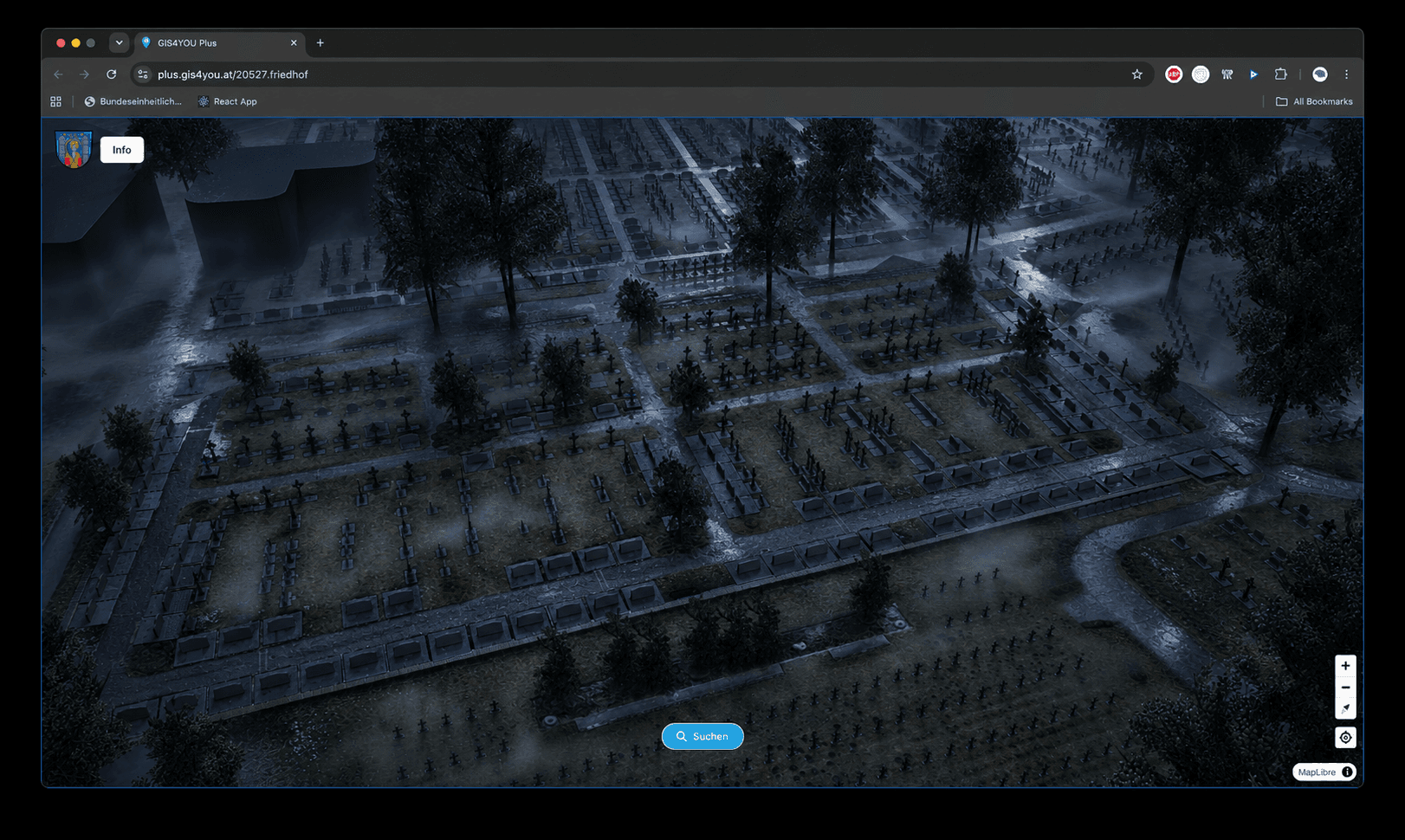
GIS4YOU with Geo-Line
Starting point: Spatial and domain data needed to be easy to find and use in a browser.
Our contribution: Neuronize works with Geo-Line on web-based GIS features and public mapping applications.
Result: Users can search for graves and see their locations on an interactive cemetery map.Explore Geo-Line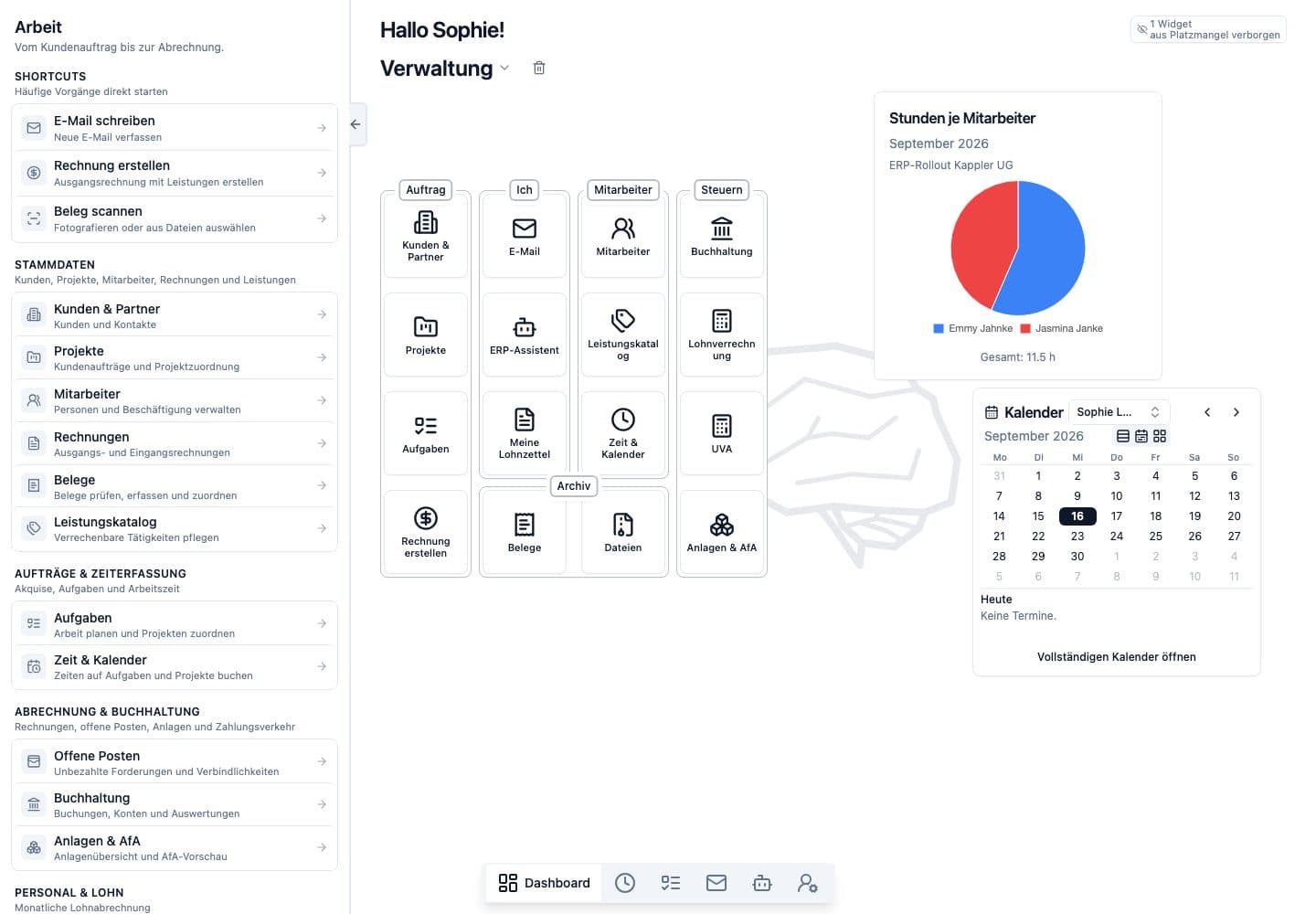
Own product · ongoing ownership
Neuronize ERP
Starting point: connect service workflows from customers and projects through time, documents and billing.
Our contribution: product design, architecture, development, operation and continuous evolution by the Neuronize team.
Result: a publicly available, role-based business application under our product and operational ownership.Explore product and featuresHospitality · supported for 2 years
Neuberger Hospitality Consulting
Starting point: consulting, performance data and digital tools must support the reality of hospitality operations.
Our contribution: 2 years of ongoing technical support for Neuberger Hospitality Consulting and collaboration on web applications involving consulting, metrics and continuous evolution.
Result: digital solutions are considered alongside performance objectives and operational use.Explore Neuberger Hospitality ConsultingMore than individual project completions: we preserve knowledge, responsibly transfer proven approaches to new contexts and remain available throughout the product lifecycle.
Four common starting points
When the business needs to move but the application slows it down.
The right technical step follows the starting point, business objective and existing system—not the loudest framework trend.
New business requirements
A process, integration or product initiative no longer fits the application. We sharpen the objective and translate it into viable options.
Assess the requirementModernise legacy software step by step
Dependencies, domain logic or accumulated architecture make change risky. We make relationships visible and modernise the existing software under control instead of forcing a risky restart.
Assess complexityMissing expertise or capacity
The internal team understands the business but needs another perspective or delivery capacity. We work in a shared backlog and transfer knowledge.
Complement the teamTake over third-party code and existing software
The application still matters, but the previous development partner is no longer available or suitable. We take over third-party code, assess risks and plan the first controlled release.
Discuss takeoverFrom business case to stable operation
Technical decisions do not start with technology.
We connect business clarification, architecture and delivery in a traceable process. Afterwards we remain available across the product lifecycle for software maintenance, evolution, bugs, operations and domain understanding.
- 01
Clarify the business case
Understand the objective, users, process, constraints and expected impact.
Outcome: shared problem definition - 02
Learn the current system
Assess application, code, technologies, operations and collaboration in the free onboarding.
Outcome: documented system and initial fit - 03
Design the solution
Compare options, state risks and prepare relevant architecture decisions.
Outcome: reasoned solution path - 04
Prioritise
Turn value, dependencies and effort into a realistic sequence and acceptance criteria.
Outcome: deliverable next increment - 05
Build and verify
Develop, review, appropriately test and release changes under control.
Outcome: code, tests, release and acceptance - 06
Observe and evolve
Observe behaviour after release, incorporate feedback and derive the next steps.
Outcome: support and knowledge that stays
Quality you can inspect
Reduce risk instead of promising zero defects.
Existing applications contain domain logic, dependencies and historical decisions. Our deliverables remain tangible after release: documented decisions, understandable code, tests, release knowledge and an available partner.
Requirements and decisions
Objectives, assumptions, architecture decisions and relevant alternatives are recorded clearly.
Clear acceptance criteria
Expected behaviour and the way to verify it are visible before implementation.
Code reviews
Relevant changes are reviewed by a second person for clarity, risk and maintainability.
Appropriate tests
Test scope and type follow risk—from targeted automated tests to business acceptance.
Controlled releases
Approval, deployment and rollback paths are planned to match application criticality.
Post-release observation
We review signals and feedback after release so unexpected behaviour becomes visible early.
Ownership and availability
Personally available. Technically direct.
Neither contacts nor knowledge disappear at project completion. We remain available for evolution, bugs, operations and domain questions; ownership, backup and emergency paths are agreed for the product.
Named contact
Fabian Vidounig guides the initial phase as CEO & CTO and head of the technical team. Ongoing projects explicitly name both the responsible person and their backup.
Direct access to developers
Business and technical questions reach the responsible developers without unnecessary relay loops.
Short decision paths
Architecture, prioritisation and escalation decisions can be made directly with company leadership.
SLA with emergency rules
Project SLAs define availability, channels and response times. Emergencies are immediately received and prioritised through the agreed emergency path.
Technologies in use
The existing system sets the frame. The task determines the path.
Technology is not an end in itself. This selection represents web technologies we work with; we establish their suitability for your application during the free technology fit check.
Frontend
12 technologies- TypeScript
- JavaScript
- React
- Next.js
- HTML5
- CSS3
- Tailwind CSS
- Bootstrap
- ShadCN UI
- Material UI
- Angular
- Vue.js




Backend & interfaces
19 technologies- Node.js
- Express
- PHP
- Laravel
- Python
- FastAPI
- C#
- .NET
- Java
- Spring
- Apache
- nginx
- REST APIs
- GraphQL
- Webhooks
- RabbitMQ
- Apache Kafka
- OpenAPI
- Zod













Databases & geospatial
8 technologies- PostgreSQL
- PostGIS
- MongoDB
- MinIO
- MySQL
- MariaDB
- SQL Server
- Redis








Infrastructure & tooling
16 technologies- Docker
- UFW
- Linux – Ubuntu
- Kubernetes
- Jira
- GitHub Actions
- GitLab CI/CD
- Sentry
- Prometheus
- Grafana
- Terraform
- Ansible
- Keycloak · OAuth/OIDC
- npm
- Git
- GitHub











FAQ
Questions about free onboarding and takeover
What does continued development cost after the fit check?
The fit check remains free. Afterwards, you receive a transparent scope for the prioritised next increment, including deliverables, acceptance criteria and a sound effort estimate. You decide without obligation whether we continue together.
When can you start—and when will we see a result?
An initial consultation is usually possible on the same business day. The fit check typically provides a documented baseline and, where it can be safely bounded, a first small feature within one week. We agree the next start based on urgency and capacity.
Is initial code access really free?
Yes. The agreed onboarding, initial code access and technology fit check remain free even if we conclude that there is no suitable fit.
Can a first implementation be part of onboarding?
Yes, when a small, safe and useful task can be bounded clearly. Access, test environment, acceptance and any production use are agreed in advance.
Does our application have to be rebuilt?
No. We compare continued development, targeted modernisation and replacement based on the business objective, technical state, risk and economics.
What if there is little documentation?
Missing documentation does not rule out collaboration. Domain conversations, code, the data model and system behaviour help reconstruct relevant knowledge under control.
How do we avoid becoming dependent on another development partner?
Access, repository, documentation, usage rights, responsibilities and handover options are defined transparently before commissioning. Decisions and operational knowledge remain traceable so the product is not tied to individual knowledge.
Do you work with our internal team or existing service providers?
Yes. We can own a bounded increment, add delivery capacity or collaborate through a shared backlog, reviews and releases. Roles, decision paths and interfaces are explicitly agreed at the start.
Does Neuronize also provide maintenance and operations?
Yes, if the system and responsibility scope fit. Operations, updates, monitoring, emergency paths, availability and response times are defined in the project SLA.
How quickly will I receive a response?
You will receive a personal response within one business day. You can request a callback directly in the form.
Request a free assessment
Reach a technical first conversation in a few minutes.
The business case, desired change and your contact details are enough to start. Technical details are optional; credentials and source code are exchanged only through an agreed secure path.
- 01Send the enquiry with an optional callback request
- 02Receive a personal response within one business day
- 03Agree scope and secure access for onboarding
- 04Discuss fit, initial technical findings and next steps